
The Difference Between Real Stained Glass and Leaded-Effect Glass
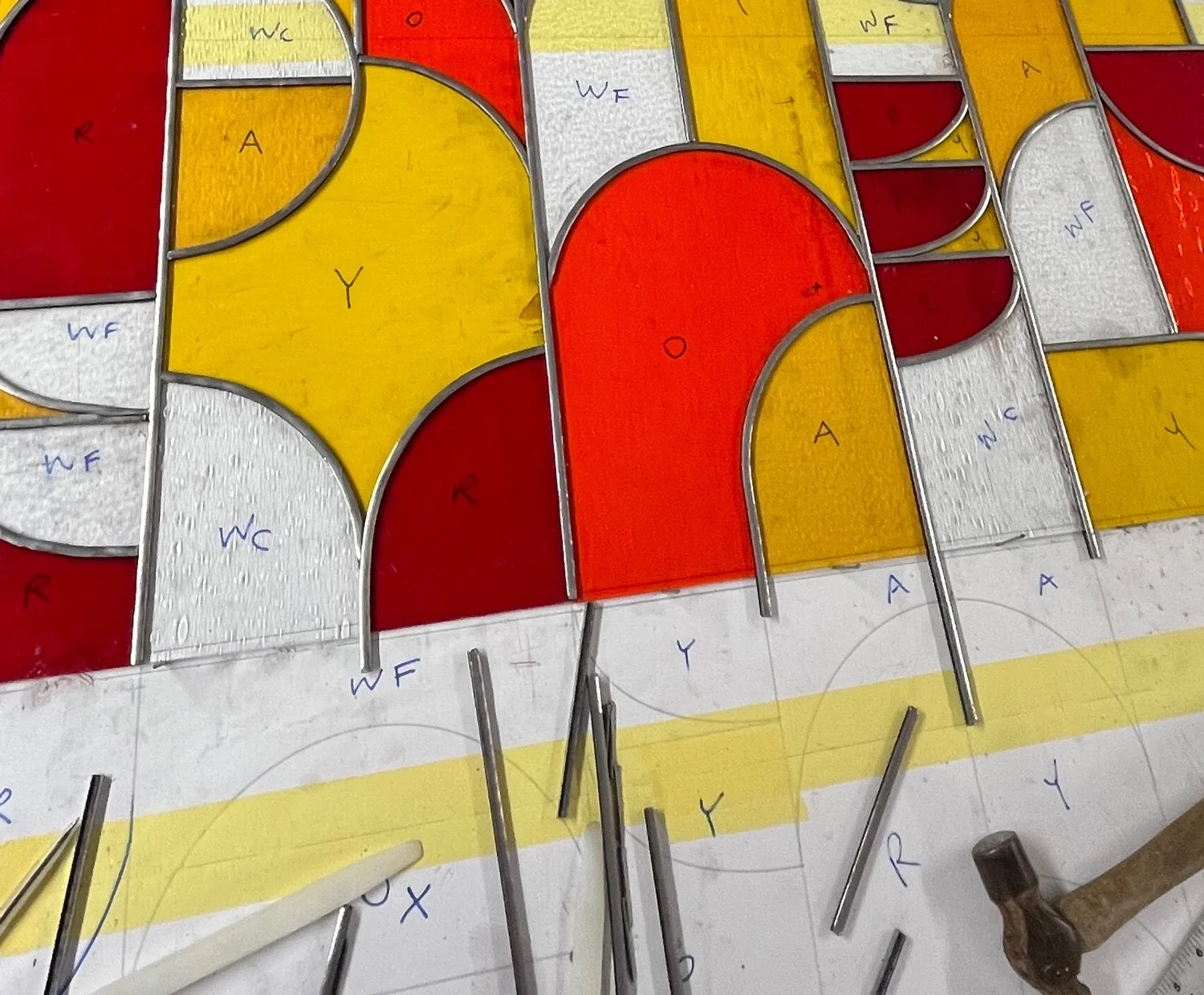
If you’ve been researching stained glass doors or panels, you’ve probably noticed that prices are all over the place. That’s often because not everything labelled “stained glass” is actually made the same way.
At Eirlume Studio, we’re often sent reference images to quote for that people assume are traditional stained glass, when they’re actually leaded-effect designs. It’s a really common misunderstanding and one we come across all the time.
Understanding the difference is important, as it explains why genuinely handcrafted stained glass is priced and valued the way it is and why it’s a very different product altogether.
What Is Real Stained Glass?
Real stained glass is a traditional craft that has been practiced for centuries. At Eirlume Studio, our stained glass is made by hand using time-honoured techniques.
This process involves:
Cutting individual pieces of coloured glass by hand
Shaping each piece to fit a design
Joining the glass using lead came or copper foil
Soldering, cementing and finishing the panel for strength and longevity
The colour in real stained glass is within the glass itself, not applied to the surface. Properly made stained glass panels can last 100 years or more, and can be repaired, restored and passed down through generations.
What Is Leaded-Effect or Faux Stained Glass?
Leaded-effect stained glass is a modern, decorative alternative designed to look like stained glass at a lower cost.
Typically, this involves:
Clear glass panels
Adhesive lead strips applied to the surface
Coloured vinyl films or laminates to create colour
Because the colour and “lead” sit on the surface of the glass, these panels are quicker and cheaper to produce. However, they are not made using traditional stained glass methods and have a much shorter lifespan.
The Limitations of Leaded-Effect Glass
While leaded-effect glass can look convincing in photographs, it has several practical limitations that are worth understanding.
Because the colour and lead are applied to the surface rather than being part of the glass itself, leaded-effect panels can:
Fade, peel or discolour over time, particularly in areas exposed to strong sunlight
Be difficult or impossible to repair once damaged
Lose definition and sharpness as adhesives age
Offer little long-term value compared to traditional stained glass
In doors and windows, where light, heat and condensation are factors, these issues can become more noticeable over time. For this reason, leaded-effect glass is best understood as a short-term decorative finish rather than a lasting architectural feature.
Why Handcrafted Stained Glass Costs More
The difference in price reflects the time, skill and materials involved. Handcrafted stained glass is slow, precise work, requiring training and expertise.
Rather than a decorative finish, real stained glass is a structural artwork, built to last, to age beautifully and to become part of a building’s story. Its colour is inherent in the glass itself, meaning it won’t fade or peel over time and individual pieces can be repaired or restored if ever needed.
Properly made stained glass has a depth and character that surface-applied alternatives simply don’t have, which is why it’s something people choose as a long-term investment for their home or business.
Our Approach at Eirlume Studio
At Eirlume Studio, we focus exclusively on traditional stained glass, as it aligns with our values of craftsmanship, longevity and quality. Our pieces are designed to bring light, colour and meaning into a home or business and to be cherished for generations.
If you’re considering stained glass for your place, we’re always happy to talk through your ideas and advise on what can be achieved using genuine stained glass.